
Magisk is the ultimate open-source root access management tool for Android devices. Developed by topjohnwu, Magisk operates completely “systemless-ly.” Unlike traditional rooting methods that modify your core system partition, Magisk alters only the boot image (boot.img). This allows you to gain complete superuser control over your device safely, without breaking system integrity or blocking official factory software updates.
📥 Direct Download Section (Latest & Stable Versions)
Always download the official, untampered Magisk package for your phone. The app acts as both the normal application manager and the flashable custom recovery script.
| Software Version Name | Release Type | Official Download Links |
| Magisk v30.7 (Latest) | Stable Release | 📂 Download Magisk v30.7 APK |
| Magisk v30.2 | Stable Release | 📂 Download Magisk v30.2 APK |
| Magisk v28.1 | Legacy Stable | 📂 Download Magisk v28.1 APK |
| Magisk v28.0 | Legacy Stable | 📂 Download Magisk v28.0 APK |
| Magisk v27.0 | Older Build | 📂 Download Magisk v27.0 APK |
| Magisk v26.4 | Older Build | 📂 Download Magisk v26.4 APK |
Developer Debug Files
If you are troubleshooting module scripts or analyzing system failures, grab the official debug package here:
Key Features of Magisk Universal Suite
-
Systemless Rooting: Root your smartphone while keeping core system files untouched. This makes installing official Over-The-Air (OTA) system upgrades possible without fully losing your root configuration.
-
Central Command Manager: The modern integrated Magisk app interface provides easy control over granular superuser permissions, logs requests, and offers biometric authentication protection.
-
Zygisk & Custom Modules: Run custom code injection scripts seamlessly inside app processes. Install localized ad-blockers, custom audio drivers (like Viper4Android), custom fonts, and system UI tweaks without modifying the system directory.
-
Hide Root Controls: Includes a built-in DenyList configuration panel to hide root binary strings from picky financial, banking, corporate, or gaming applications.
Official Changelog Highlights
Recent Engine Optimizations:
-
Core Update: Migrated major portions of the code backend to Rust to optimize device performance and avoid memory leaks.
-
Android Support: Added full operational compatibility rules extending up through Android 16.
-
Fixes (v26.4): Resolved specific edge-case bugs breaking custom modules using
overlayfsand repaired standard folder.replacefunctionality. -
Property Tracing: Reduced systemic tracking traces inside the
resetpropframework to enhance stealth.
How to Install Magisk on Your Phone
There are two easy methods to install Magisk depending on your current setup.
Method 1: The Fastboot Method (Patching boot.img)
This is the standard and safest method for modern Android devices.
-
Install the Magisk APK on your phone like a normal application.
-
Obtain the official stock firmware file for your phone’s exact model/build number and extract it to find the
boot.img(orinit_boot.imgfor newer Android versions). -
Move that image file over to your phone’s internal download folder.
-
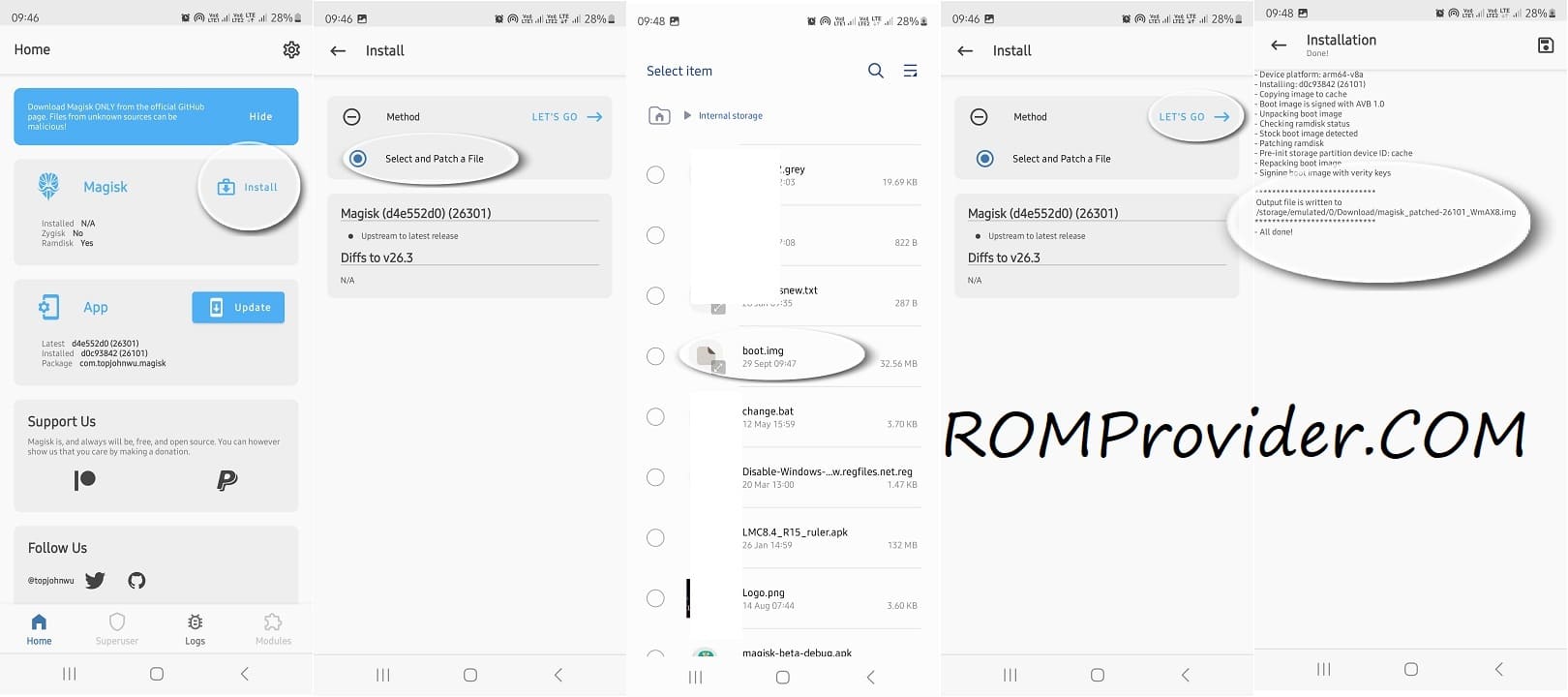
Open the Magisk App, tap Install next to Magisk, and select “Select and Patch a File”.
-
Locate your
boot.imgfile and let the app process it. Once finished, copy the new file (found in your Downloads folder titledmagisk_patched.img) back to your PC.

-
Flash the patched image to your device using ADB & Fastboot commands via your computer terminal:
-
fastboot flash boot magisk_patched.img(orfastboot flash init_boot magisk_patched.imgdepending on your chip file structure).
-
Method 2: Custom Recovery Method (TWRP / OrangeFox)
If you already have a custom recovery partition configured on your handset:
-
Download the required Magisk.apk file above to your phone’s local storage.
-
Open your local file explorer and simply rename the file extension from
.apkto.zip(Example:Magisk-v30.7.apk➔Magisk-v30.7.zip). -
Power down your phone and boot it directly into custom recovery mode (Hold Power + Volume Up).
-
Tap on Install, select your modified Magisk.zip archive file, and swipe the slider to confirm flash.
-
Reboot your system. Open your application drawer to find the initialized Magisk management dashboard app waiting for you!